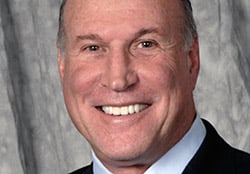
The Center for Consumer Freedom (CCF), also called the Center for Organizational Research and Education, is a nonprofit corporation run by lobbyist Rick Berman through his Washington, D.C.-based for-profit public relations company, Berman & Co. The CCF, formerly known as the Guest Choice Network, was set up by Berman with a $600,000 "donation" from tobacco company Philip Morris.
Berman arranges for large sums of corporate money to find its way into nonprofit societies of which he is the executive director. He then hires his own company as a consultant to these nonprofit groups. Of the millions of dollars "donated" by Philip Morris between 1995 and 1998, 49% to 79% went directly to Berman or Berman & Company.
Berman is an influence peddler. He has worked out a scheme to funnel charitable donations from wealthy corporations into his own pocket. In exchange, he provides a flurry of disinformation, flawed studies, op-ed pieces, letters to the editor, and trade-industry articles as well as access to his high-level government contacts, who are servants of the industries he represents.
Berman's name might sound familiar. In 1995, he and Norm Brinker, his former boss at Steak and Ale Restaurants, were identified as the special-interest lobbyists who donated the $25,000 that disgraced then-House Speaker Newt Gingrich, who was hauled before the House Ethics Committee for influence-peddling over the money. Berman and Brinker were lobbying against raising the minimum wage.
Berman is a spin doctor. For example, he has argued against a Mothers Against Drunk Driving initiative to lower the blood alcohol content (BAC) limit for drivers by claiming that the stricter limits would punish responsible social drinkers. He has claimed that U.S. Centers for Disease Control and Prevention (CDC) warnings about salmonella-related food poisoning are just "whipping up fear over food."
Here's how an internal Philip Morris memo described his spin: "His proposed solution would broaden the focus of the 'smoking issue,' and expand into the bigger picture of over-regulation." Smoking won't kill you—over-regulation will.
Berman is "a one-man wrecking crew on important issues." His approach has been described as "misleading" and "despicable." He's been called "a tobacco company whore," but he's branched out since then.
Using "freedom of choice" as his battle cry, he has now taken on PETA and a number of other groups and organizations whose points of view could have an impact on the profits of his clients by waking consumers up. Berman's Guest Choice Network has an "advisory panel" whose members in 1998 included officials representing companies ranging from Cargill Processed Meat Products and Outback Steakhouse to Minnesota Licensed Beverage Association and Sutter Home Winery. Berman's clients are companies with vested interests in low employee wages; cheap, unhealthy restaurant-chain food, particularly meat; and tobacco, soft drink, and alcohol consumption—companies like Ruth's Chris Steakhouse, Armour Swift, and Philip Morris, whose product line includes Kraft Foods and everything from Marlboro cigarettes to Oscar Meyer wieners and which is a major shareholder in its former subsidiary Miller Brewing, now known as SABMiller.
PETA's successes in driving the fast-food industry to offer vegan options and more humane conditions for animals used for food have sent ripples of fear through the food and beverage service industry. About the same time that McDonald's buckled to PETA's demands, Berman changed his front group's name and stepped up his attacks.
One of his accusations toward the booming vegan meat industry, specifically targeting revolutionary companies such as Beyond Meat, involves the ingredients listed on the products' packaging. While comparing vegan burgers with beef burgers, he neglects to mention that the only ingredient required to be on the meat packaging (beef) is directly correlated to heart disease and high cholesterol. He claims that many people put a "health halo" around vegan burger patties, which contain a variety of plant-based ingredients, derived from peas, potatoes, and coconuts—all of which happen to be cholesterol-free.
Berman also fails to disclose the hidden ingredients often found in beef burgers, namely fecal matter and deadly bacteria. According to a study conducted by Consumer Reports in 2015, "All 458 pounds of beef we examined contained bacteria that signified fecal contamination (enterococcus and/or nontoxin-producing E. coli), which can cause blood or urinary tract infections." It also found strains of S. aureus bacteria in 10% of the tested burgers, which produces a toxin that can't be destroyed by cooking.
"[I]f we decide to fall back to eating regular ol' burgers and sausages, that's hardly a bad outcome," Berman writes in one of his opinion pieces. But the environmental outcome from slaughtering billions of animals every year is very bad. According to the University of Michigan, the "Beyond Burger generates 90% less greenhouse gas emissions [and] requires 46% less energy." Every vegan also saves nearly 200 animals a year.
The key to Berman's aggressive strategy is, in his own words, "to shoot the messenger ... we've got to attack their credibility as spokespersons"—an interesting remark from someone whose background and funding so severely challenge his own credibility.
PETA has since created a response site, "PETA Saves," which discusses Berman and the CCF's smear campaign.
|







